
LinkedIn Is Not Your Inbox. But It Should Be.
A cautionary tale

TL;DR
Comment EXPERT. Comment CLAUDE. Comment FREE. Your company trained you to recognise this. LinkedIn told you it was networking.
Contents
1. We are all too busy
2. Recognise any of these?
3. The mechanic is not new
4. How to spot it
5. The honest version
6. LinkedIn is not your inbox. But it should be.
We are all too busy
We are all too busy. Too busy to keep up with every new regulation, every new tool, every new development. So when something promises to consolidate everything you need to know, you click. Of course you do. We all do.
Your company spent thousands training you not to do exactly that.
Recognise any of these?


Comment EXPERT
Comment CLAUDE
Comment FREE
Comment YES
Comment GUIDE
Comment TOOLKIT
Comment TEMPLATE
Repost for priority access
Like to unlock
Follow for the framework
Tag someone who needs this
Share to receive
You know these. You have clicked them. Most people reading this have clicked at least one in the last week.
That is not a criticism. It is the point.
The mechanic is not new
Phishing works because it borrows the visual language of trust. It looks like your bank. It looks like your IT department. It looks like a colleague. The ask feels small. The reward feels real. The cost of clicking feels low.
LinkedIn uses the same architecture. The person looks credible. Their headline is impressive. They have tens of thousands of followers. The free thing they are offering sounds like exactly what you need. The ask is a single word in the comments.
Here is a post that appeared in my feed this week. I have removed the name because the name is not the point. The pattern is the point:
BYE-BYE LinkedIn outreach... [AI tool] books 2-5 meetings/day on AUTOPILOT. For the past 2 years... EVERY single outreach tool tried adding AI to sequences. And they ALL failed. Because they solved the WRONG problem... It’s like having a top 1% sales rep working 24/7. No generic templates. No delayed responses. No effort from you. Just 2-5 qualified meetings/day on your calendar. Want to see how you can implement it in your business? 1. Connect with me 2. Comment [WORD]
The product being sold is an AI outreach tool. The mechanic to receive information about it is to perform a public action that generates reach, signals demand, and builds an audience for the next post. You are not getting something for nothing. You are paying with your attention and your implied endorsement.
If Claude or Chatgpt or Mistral or… could do what they were saying and there handout tells you how, surely this would negate the need for the product they are selling?
How to spot it
At work you are trained to pause before you click. You check the sender. You ask whether the ask makes sense. You look for the mismatch between what is being offered and what the sender normally does.
Do the same here.
Read their headline. What do they actually sell? Does the free resource they are offering align with what they sell for money, or does it only exist to generate the comment mechanic? Is the post designed to help you or to generate reach, data, and the appearance of demand?
If a person can genuinely help you they will have a conversation with you. They do not need you to perform an action first. The ones who know their subject are findable. Their posts make an argument. Their comments add something. They do not need 1,900 people to type a word to prove they exist.
The honest version
Yesterday I published a book called This Book Will Make You an AI Expert and asked people to comment EXPERT to receive it. 120,000 people saw it. 2375 commented in under 24 hours
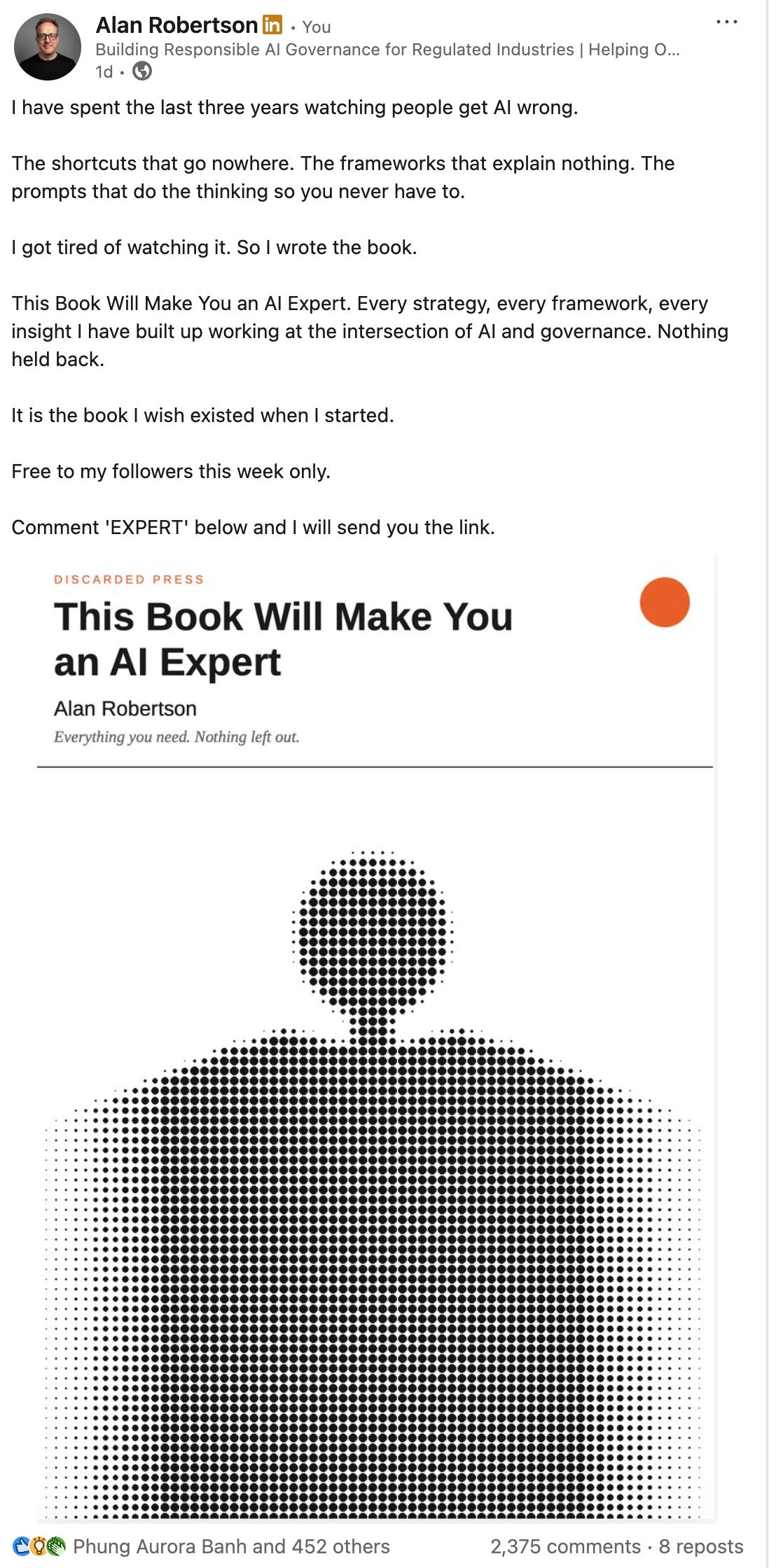
The book is not a shortcut. It is an argument that the shortcut does not exist. The blank pages are the point. The prompt that does your thinking does not exist. The strategy no one else has is yours to build. The hack is you.
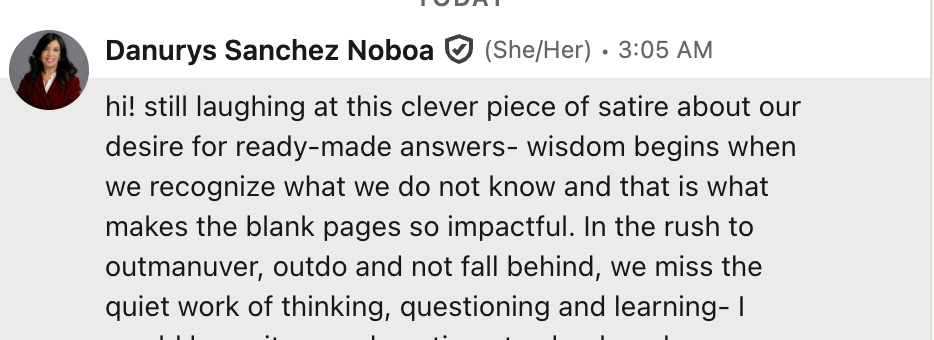
One reader told me it felt like a phishing exercise. She was an AI governance specialist with serious credentials. She fell for the mechanic, read the book, and understood the argument immediately. Her words: if this had been a phishing exercise, I would have failed.
She was right. And that was the point.
LinkedIn is not your inbox. But it should be.
The tactics that would trigger every corporate security filter in your email land without friction here every single day. LinkedIn feels safe because it looks professional, because you know the sender, because it resembles a conversation between peers.
That is exactly why it works.
The training you already have applies here too. Pause. Check the sender. Ask what they are actually getting from you. The people worth following do not need you to perform an action to prove it.
See Link to book: I do hope you like it.
This Book Will Make You an AI Expert

Everything you need to know about AI in one place. The prompts that do your thinking. The strategy no one else has. The cheat code for understanding AI. The template for sounding informed. The shortcut to expertise. The hack everyone is missing. The vault.